
Introduction
Sustainable fuels are a broad area, including green hydrogen and biofuels. To understand the role of sustainable fuels in the GCC, we consulted Thomas Rebeyrol a Infoquest Network Expert and former COO of ADNOC Distribution.
This Expert Insights piece explains the basics, clarifies misconceptions, and discusses the sustainable fuels market.
What Makes a Fuel “Sustainable”?
- Significantly reduces lifecycle GHG emissions compared to fossil fuels.
- Can be produced from renewable or low-carbon sources.
- Is scalable without long-term environmental damage.
“The goal is not zero emissions at the tailpipe—it’s near-zero across the full lifecycle.” Thomas Rebeyrol, and that lifecycle includes feedstock, production, transport, and use.
Misconceptions vs Reality
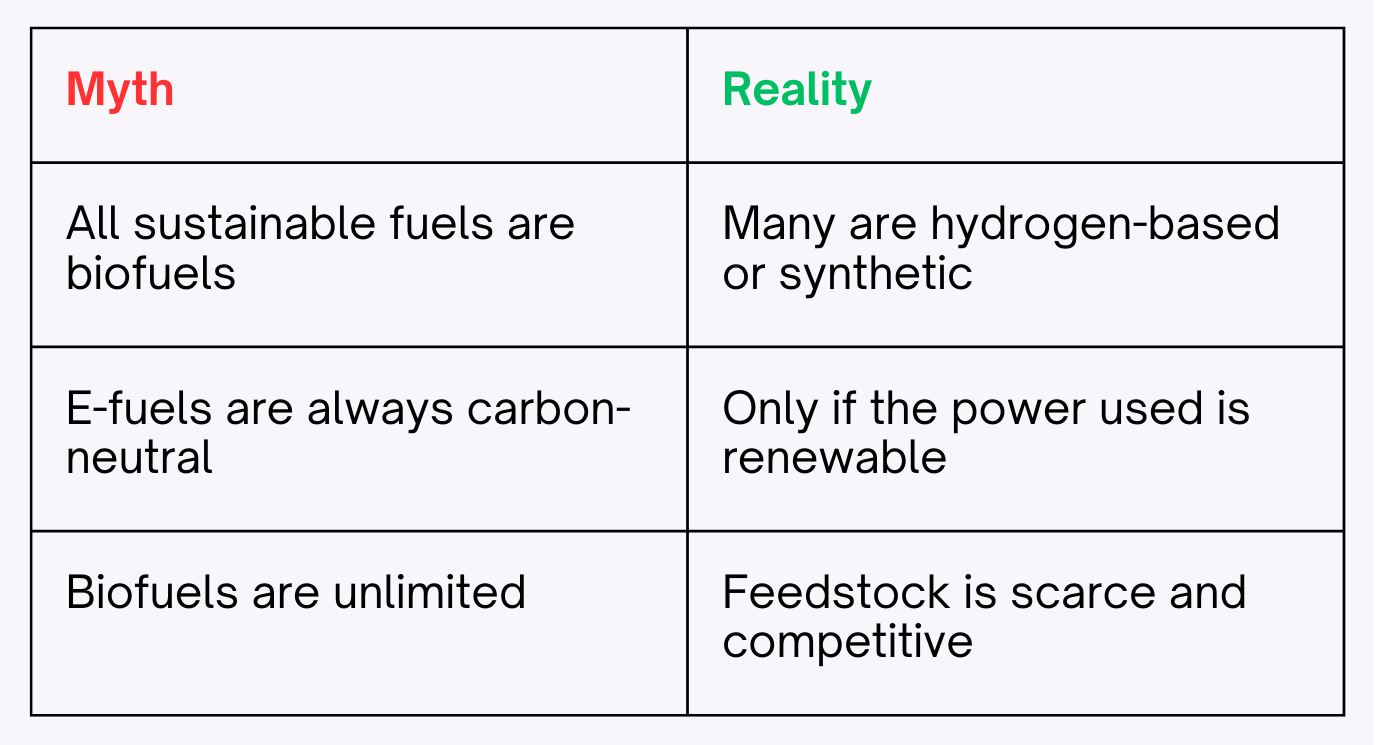
“Used cooking oil is limited by nature. The feedstock race is very real.” Thomas Rebeyrol
The GCC Advantage
Geography
- Positioned between Asia and Europe
- Access to feedstock (imports from Asia) and offtake markets (EU, Japan, Korea)
Infrastructure
- Advanced refining, storage, and export facilities
- Ports like Yanbu, Ruwais, and Sohar already process blended fuels
Capital
- State-backed giants like ADNOC and Aramco have committed billions to biofuels, SAF, and ammonia
“The GCC has infrastructure, geographic positioning, and capital—all in one place.” — Thomas Rebeyrol
Why the Molecule Matters
Each fuel has tradeoffs:
- Green Hydrogen:
- No emissions
- Requires massive electricity inputs and water
- Blue Hydrogen:
- Uses existing gas supply
- Still emits, but captures CO₂
- Ammonia:
- Easier to store than hydrogen
- Toxic, requires careful handling
- SAF:
- Drop in for aviation
- Feedstock is scarce
- E-Fuels:
- Synthetic, net-zero if powered right
- Expensive, limited scale for now
Where Is the GCC Today?
- UAE:
- Ruwais refinery producing SAF and biodiesel
- 2M tons/year blue ammonia ramp-up in progress
- Saudi Arabia:
- Jubail refinery converting to SAF
- Aramco/Total JV underway
- Oman & Qatar:
- Building early-stage ammonia/hydrogen export hubs
These are billion-dollar commitments, not trials.
What Comes Next For Sustainable Fuels in the GCC?
- Feedstock Security:
- Asia’s cooking oil won’t be enough.
- Synthetic fuels (e-fuels) are the future but are costly.
- Offtake Contracts:
- Projects need guaranteed buyers.
- Airlines, refiners, and steel producers must sign long-term contracts.
- Policy Support:
- Government mandates and carbon pricing will drive demand.
Conclusion: The Future Isn’t Just Green, It’s Complex
For consultants, developers, and investors, sustainable fuel in the GCC is a matrix of tech, policy, logistics, and finance. For guidance on this market and much deeper insights, contact us at [email protected] or here to get access to our vast network of experts.